
"4 coffee species"
5000 article(s) found

Guatemala New Oriental Cadillas Manor Wine Sunshine Parkas species, Brand recommendation and Manor
For the exchange of professional baristas, please follow the coffee workshop (Wechat official account cafe_style) Pacas (Pacas) is a natural variant of Bourbon, similar to Brazil's Kaddura and Costa Rica's Villa Sacrhi. Like other bourbon variants that have been widely planted, Pacas is a new variety formed by a single gene mutation, which gives

Species Morphology and Variety Grade History of Colombian Coffee
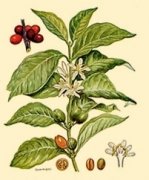
The main varieties of Colombian coffee are small grains of coffee. Plants are small trees or large shrubs, 5-8 m tall, usually much branched at base; old branches gray-white, nodes dilated, young branches glabrous, compressed. Leaves thinly leathery, ovate-lanceolate or lanceolate, 6-14 cm long and 3.5-5 cm wide, tip long acuminate, acuminate part 10-15 mm long, base cuneate or slightly obtuse, rarely rounded, entire or

Boutique coffee and boutique coffee beans
High-quality coffee beans must be high-quality beans with flawless beans.
Basic knowledge of boutique coffee knowledge of fine coffee beans
There are about 60 species of coffee in the world, of which only 25 species are cultivated to make coffee, of which only 4 species are used as commercial coffee: large fruit coffee (Coffea liberica), medium fruit coffee (Coffea canephora), small fruit coffee (Coffea arabica) and high yield coffee (Coffea dewevrei). These are botanical names. Coffee in the world at present

Planting Environment and species Morphology of Colombian Coffee
The pure taste of Colombian coffee comes from Colombia's natural environment with the most favorable conditions for coffee growth. But beyond that, it is inseparable from the hard work of local growers. In Colombia, coffee cultivation has reached 1.07 million hectares, there are about 302000 coffee plantations in the country, and 30 to 40 per cent of the rural population depends directly on coffee production. Columby

Flavor characteristics of Sidamo Flower Kui soe Coffee Bean comparison of Sakura 3.0 4.05.0 and 6.0 Coffee Taste
Professional coffee knowledge exchange more coffee bean information please follow coffee workshop (Wechat official account cafe_style) Sakuran is the title of the top geisha in Edo period in Japan, unlike modern ones, Sakuran does not climb step by step according to the level of tourist girls, but chooses the daughters of fallen aristocrats or folk girls.
A brief talk on understanding coffee beans
1. Summary: coffee is a perennial evergreen shrub or small tree of Rubiaceae. It is native to tropical Africa and has been cultivated for more than 2000 years. The Arabs began to grow coffee in 525 BC, and it was popular for Arabs to stir-fry coffee beans. They began to grow coffee beans on a large scale after the 15th century, and were widely distributed in the tropics and subtropics of Europe, Asia, Africa and Latin America after the 18th century.

Good criteria for coffee beans! Judging standard of fine coffee
At present, there is no clear judgment standard of fine coffee in the international community. Here, we will briefly explain the standards of the American Fine Coffee Association and the basic standards of coffee producing countries. American Fine Coffee Association Standard: 1. Whether it has rich dry aroma (Fragrance). The so-called dry aroma refers to the aroma of roasted or ground coffee. two。 Whether it has rich wet aroma (Aroma).
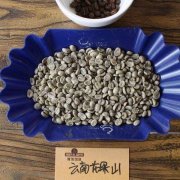
Yunnan Arabica coffee washing iron pickup species explanation Yunnan coffee roasting suggestions and brewing parameters
Please pay attention to coffee workshop (Weixin Official Accounts cafe_style) for professional barista communication. Small coffee is suitable for growing on mountains with an altitude of 8001800 meters. If the altitude is too high, it tastes sour, and if it is too low, it tastes bitter. Arabica coffee is mostly planted in dry and hot valleys at an altitude of about 1100 meters, so the acidity is moderate, the aroma is rich and mellow. There are many areas in Yunnan suitable for small coffee

Different colors of bourbon coffee have different flavors and tastes. How much is bourbon coffee beans
For more information on coffee beans, please follow the coffee workshop (official Wechat account cafe_style) generally speaking, different varieties of bourbon beans [red bourbon] [yellow bourbon] [French missionaries] are similar in flavor, with obvious flavors of dark chocolate, cocoa, nuts and caramel, supple acidity and low bitterness. Early stage (coffee)

What is LEVELUP90+ Candle Coffee Coffee Candle Coffee Baking degree in Sidamo
Professional coffee knowledge exchange more coffee bean information please pay attention to the coffee workshop (Wechat official account cafe_style) what is candle candle coffee LEVEL UP 90 + Ethiopian native species are produced in an area of 17502000m above sea level fertile soil temperature and rainfall make Sidamo beyond the imagination of sun-dried beans sun-dried beans have better sweetness but less washed beans

Description method of planting Flavor and taste of Bourbon Pacas Coffee
Pacas (Pacas) is a natural variant of bourbon, similar to Kaddura of Brazil (Cuturrra) and Villa Sacrhi of Costa Rica. Like other bourbon variants that have been widely planted, Pacas is a new variety formed by a single gene mutation, which gives Pacas a crucial characteristic: the plant can be further closely planted, and eventually the body.

Yunnan anaerobic katim unexpectedly has rum wine katim coffee beans Arabica
Professional coffee knowledge exchange More coffee bean information Please pay attention to coffee workshop (Weixin Official Accounts cafe_style) Front Street-Yunnan anaerobic sun katim, katim and Arabica relationship brief introduction Scientists point out that coffee genus contains 103 coffee native species (coffee species), among which coffee beans can be artificially planted and produced, and there are very few varieties with great commercial value.

Yemeni mocha Coffee producing area Information introduction _ Yemeni mocha Coffee Bean species and production method Teaching
Professional coffee knowledge exchange more coffee bean information please pay attention to the coffee workshop (Wechat official account cafe_style) Yemeni mocha coffee is named from the port of Mocha in Sanua, the capital of Yemen, the highest quality of mocha coffee is Barney. Yemeni Matali coffee grown in Matalu. Matali is the best-known and highest-altitude coffee producing area in Yemen. Coffee produced in Yemen

West Hannah Manor in Kenya introduces the flavor characteristics of Kenyan coffee
For more information on coffee beans, please follow the Coffee Workshop (Wechat official account cafe_style) West Hannah Manor is located in the Thika region of the central province of Kenya, the primitive bourbon species introduced by French missionaries at the end of the 19th century, the Harris family of West Hannah Manor has grown coffee in the Thika area and has a history of more than 100 years, where it has red volcano fertile soil.

What is the planting history and flavor of the legendary low-caffeinated bourbon species in Reunion / Bourbon?
Professional coffee knowledge exchange more coffee bean information please follow the coffee workshop (Wechat official account cafe_style) Reunion Island / Bourbon legendary low-caffeine sharp bourbon species planting history and flavor? These ordinary words fell into the eyes of coffee players, saying that more than a decade ago, two legendary varieties of coffee appeared and shook up the whole coffee world. One was Ge.

How does Hawaiian Kona Coffee Grade? introduction to Hawaiian Kona Coffee
For more information on coffee beans, please follow the Coffee Workshop (Wechat official account cafe_style) Kona Coffee beans in Hawaii there are about 4,500 coffee tree species in the world, but the three original species widely cultivated are Arabica, Robusta and Coffee Liberica. There is a commercial price among them.

Coffee botany knowledge
The botanical description of coffee is: "Coffee is Rubiaceae, coffee, evergreen shrubs or small trees."
Knowledge of coffee botany
There are more than 60 kinds of coffee, but there are roughly two varieties of coffee grown commercially on a large scale, one is Arabica, accounting for about 70 percent of the world's coffee planting area, and the other is Robasta, accounting for about 30 percent of the world's coffee planting area.

Coffee Seedling Technology: the production Management method of Coffee Seedling stage and the distance between Coffee planting plants
Professional coffee knowledge exchange more coffee bean information please follow the coffee workshop (Wechat official account cafe_style) coffee production capacity, usually using a conversion factor to convert the kilograms of berries picked from a coffee tree or a batch into the kilograms of raw beans. This conversion coefficient, also known as bean yield, should be calculated according to different coffee gene types. Elaraby